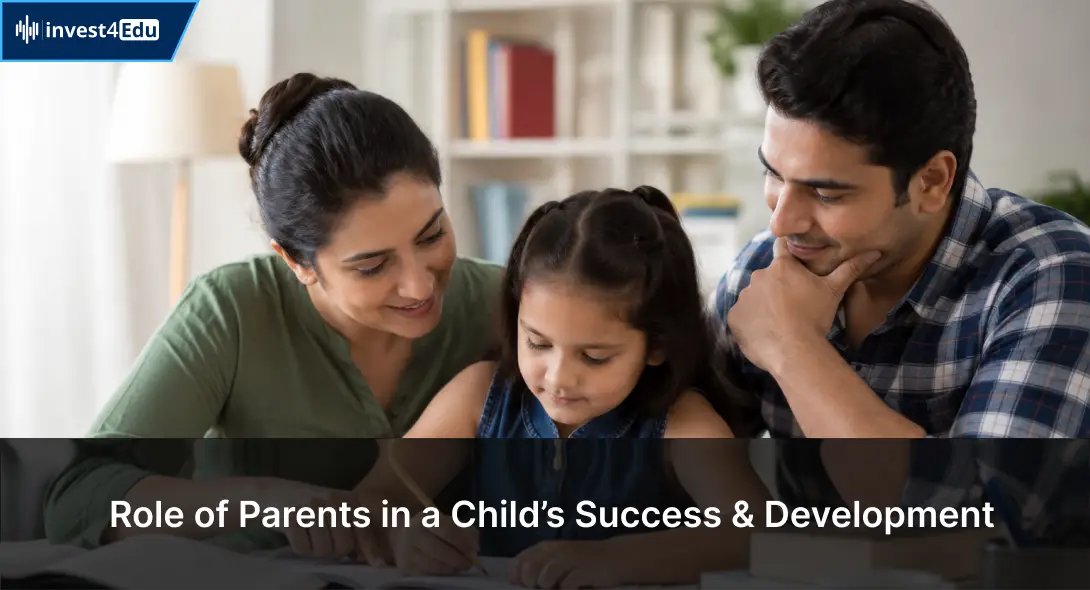
INTRODUCTION
Most Indian parents believe the answer to their child's success is simpler than ever. Just get them into the right school. Hire the right tutor. Download the right app. The system will handle the rest.
But here's what no tutoring centre will tell you: The most critical variable in your child's success isn't happening in a classroom or on a screen. It's happening at your dinner table. During conversations after a bad day. In how you respond when they fail.
In the sections ahead, we'll explore what actually drives child development—the real factors that shape how your child grows, learns, and becomes who they are.
Understanding a Child's Success and Development Holistically
Most parents are chasing the wrong thing. You see a kid get 95% on an exam and think—that's success. But that same kid might have anxiety attacks before every test. Another kid gets into IIT and can't make a single decision without their parent. A third scores well but has no real friends.
Nobody talks about those parts. We've narrowed success down to marks. That's basically all we measure. Everything else becomes background noise. But watch what actually happens: A kid who can't handle failure falls apart no matter how brilliant they are. Someone without confidence will doubt themselves even in areas where they're actually good. A kid who doesn't feel safe at home falls apart. Their grades slip. They isolate. They shut down.
Everything is connected to that one thing. How your child performs depends on whether they feel valued. Whether they can take risks depends on whether they've seen you handle your own failures. Whether they persist through difficulty depends on whether anyone taught them that difficulty is normal. Your child needs to learn concepts—obviously. But they also need to develop a backbone. Judgment. The ability to bounce back. That's not something a school can do alone. That's a parent thing.
How Parents Help Children Succeed
A tutor can explain algebra. A school can teach history. But they can't do what you do—which is everything else.
The role of parents in child development happens in moments. When they ask a question at dinner, and you actually engage with it. These small things? They shape everything.
Responsibilities Of A Mother In A Child's Development
Mothers often become the emotional anchor. Not because of biology, but because mothers typically spend more time noticing—noticing when a child is quiet, when they're stressed, when they need to talk. That attention matters. Most Indian mothers are wired to control everything. Keep the grades up. Get them into the right school.Prevent anything from going wrong. But that's actually the trap.
Your real job is different:
- Be there when they want to talk
- Don't rush in to solve it
- Let them sit with the problem for a bit
- Show your own mess sometimes
- Apologise when you mess up
It's simpler and harder: be present. Listen without immediately offering solutions. Let them struggle a bit. Stop trying to be the perfect mother. Just be a real one. Does your kid see you stressed? Fine. They see you fail at something? Even better. They watch you apologise to them? That teaches them more than any parenting book.
Father's Contribution To A Child's Growth
Fathers shape how children take risks. A lot of Indian dads check out of the emotional stuff. They work, they provide, they monitor grades. But that's not enough. Your kid needs you to actually show up.
That means:
- Actually, ask them about their day. Not "how was school" but real conversation
- Don't pretend you know everything
- Spend actual time with them, not just money
- Let them see you handle your own failures
- Push them to try hard things
Daily Parenting Tips for Child Success
Most parents don’t lack effort. They lack direction. They’re already doing a lot—school runs, homework checks, tuition planning, constant reminders. And yet, sometimes the results still don’t line up the way they expect.
How parents help children succeed in school rarely comes down to major decisions. It’s usually the small, repeated daily reactions that slowly shape how a child responds to learning.
And most of the time, those patterns are so normal that nobody even notices they’re forming something bigger underneath.
Emotional Support in Child Development
A child doesn’t always need solutions. A lot of the time, it’s not advice they need. It’s just emotional safety. When a child feels understood first—before being corrected—they slowly become more stable inside.
This is a core part of how parents influence child development—not through advice, but through emotional response. A calm parent in a stressful moment often shapes a more confident child than hours of instruction ever can.
Parents as the First Teachers
Before school begins, children are already learning everything that matters. How to talk. How to react. How to observe the world.
This is where the role of parents in a child’s success becomes invisible but powerful. A child who sees patience at home naturally absorbs it. No syllabus needed.
Parents in Learning & Academic Growth
Most people think learning starts with books. Most learning doesn’t begin with textbooks the way people assume. It usually starts when a child becomes curious about something.
Parents who ask things like “Why do you think that happened?” often end up teaching more than they realise. The child starts thinking through things instead of waiting for ready-made answers.
That part of parental involvement in learning gets misunderstood a lot, too. Many parents think involvement means constantly checking, correcting, or supervising everything. It doesn’t always have to look like that.
Shape Behaviour & Communication
Children don’t listen to instructions as much as they copy patterns. The way parents speak during disagreements becomes the child’s default communication style later. This is where the importance of parents in education expands beyond academics—it enters behaviour, tone, and emotional expression.
Academic & Mental Health Concerns
A certain amount of pressure exists in almost every child’s life now. Exams, competition, expectations—it starts early. But unmanaged pressure is.
A child constantly pushed without emotional balance starts linking learning with stress instead of growth. This is where many families unknowingly create resistance instead of performance. The balance between expectations and emotional space defines long-term academic stability.
Healthy Parent–Child Communication
Most communication gaps are not about language. They are about timing and tone. Children open up when they don’t feel judged in advance.
A simple shift—from “Why did you do this?” to “What happened?”—changes the entire dynamic. This is often the missing layer in how parents shape a child’s personality and future.
Parental Influence on Career Choices
Career decisions don’t start in college. They start much earlier—in casual conversations at home. What parents praise, what they discourage, what they fear… all quietly shape ambition.
Sometimes children don’t reject careers. They just avoid disappointing expectations. That’s why early influence matters more than late guidance.
Building Confidence and Independence
Confidence is not taught. It’s experienced. Kids become more confident when they get chances to figure things out on their own — even small things like choosing how to finish a task or handling minor problems without immediate help.
lot of parents step in too quickly because they care. But sometimes, constant rescuing quietly teaches a child to depend on others before depending on themselves. The goal is not control. It’s a gradual release of responsibility.
Technology And Social Media Influence
Screens are now part of childhood development—whether we accept it or not. Instead of only restricting technology, guiding how it is used becomes more important. Because children don’t just consume content. They absorb behaviour patterns from it.
Balancing Freedom and Guidance
A lot of parenting problems start here without parents even realising it. Some children grow up with every decision made for them. Others are left to figure out everything alone too early.
either usually works for long. Children need enough freedom to think for themselves, but also enough guidance to know when they’re heading in the wrong direction.
The balance keeps changing as they grow. And honestly, that’s what makes parenting complicated in the first place.
Parenting Styles Quietly Shape a Child’s Future
Many parenting mistakes to avoid are not dramatic mistakes. They’re repeated emotional patterns.
The goal of parenting is not control. It’s preparing children to function independently and confidently in the real world. That changes the entire equation.
Mistakes that Parents Should Avoid
A lot of unhealthy parenting patterns don’t look harmful in the beginning. That’s why many parents notice the impact only much later.They are:
- Saying things like “Look at how well others are doing” too often
- Turning every conversation into marks, ranks, or academic performance
- Treating low marks like a personal failure for the whole family
- Pressuring children toward careers they never genuinely connected with
- Ignoring confusion, stress, or anxiety because “studies matter more right now”
- Spending time around children without really listening to them
- Making children feel guilty first and calling it motivation later
- Reacting harshly to mistakes instead of helping children understand them
- Expecting children to get everything right all the time
- Jumping in immediately whenever a child faces even a small difficulty
- Solving every issue for the child instead of teaching responsibility slowly
- Dismissing hobbies because they don’t look academically useful
- Giving unlimited screen freedom just to avoid arguments or keep children occupied
- Fighting constantly at home and assuming children are “too young to notice”
When Parents Should Seek Professional Guidance
A lot of parents wait too long before asking for help. Not because they don’t care. Usually, it’s the opposite. They assume a child will “grow out of it.” Or they worry that seeking guidance means something is seriously wrong. In many families, there’s still this idea that outside support is only for extreme situations.
But child development rarely works that way. Small struggles ignored for years often become bigger emotional or academic problems later. And sometimes the signs are so subtle that parents mistake them for “personality.”
- A child becoming unusually quiet.
- Sudden anger over small things.
- Loss of interest in studies.
- Constant fear of failure.
- Avoiding social situations.
- Extreme dependence on parents.
These things don’t always look alarming in the beginning. That’s the tricky part.
Because the role of parents in child development is not about solving everything alone. It’s also about recognising when a child may need support beyond the family environment. And honestly, modern parenting has become more psychologically complex than most people admit.
Children today grow up under constant comparison, algorithm-driven attention, academic pressure, and social validation loops that didn’t exist at this scale before. Parents are trying to manage problems that even adults struggle with themselves. That changes parenting completely.
Sometimes a child may need:
- academic counseling
- behavioral support
- emotional therapy
- career guidance
- assessments
- communication coaching
And seeking help early can prevent years of confusion later.
Conclusion
Children don’t grow only through schools, marks, or tuition classes. A lot of their confidence, thinking patterns, and emotional strength come from what they experience at home every day. That’s why the role parents play is much bigger than just academics. Small things — conversations, support during failure, freedom to express opinions, balanced guidance — often shape a child more than people realise.
Parents today are dealing with a completely different environment than the previous generation. New career paths keep appearing, children are exposed to constant online influence, and even “safe” career choices don’t feel as predictable anymore. A lot of parents today end up searching for guidance simply because there’s too much information and too many career choices to make sense of alone.
That’s where platforms like Invest4Edu can be useful for understanding career paths, student strengths, and future planning more practically.