The Government of India has chosen various national symbols to represent the identity and heritage of the country. For example, the tiger is the national animal, the peacock is the national bird, and the lotus is the national flower. These symbols are recognised and celebrated across the nation.
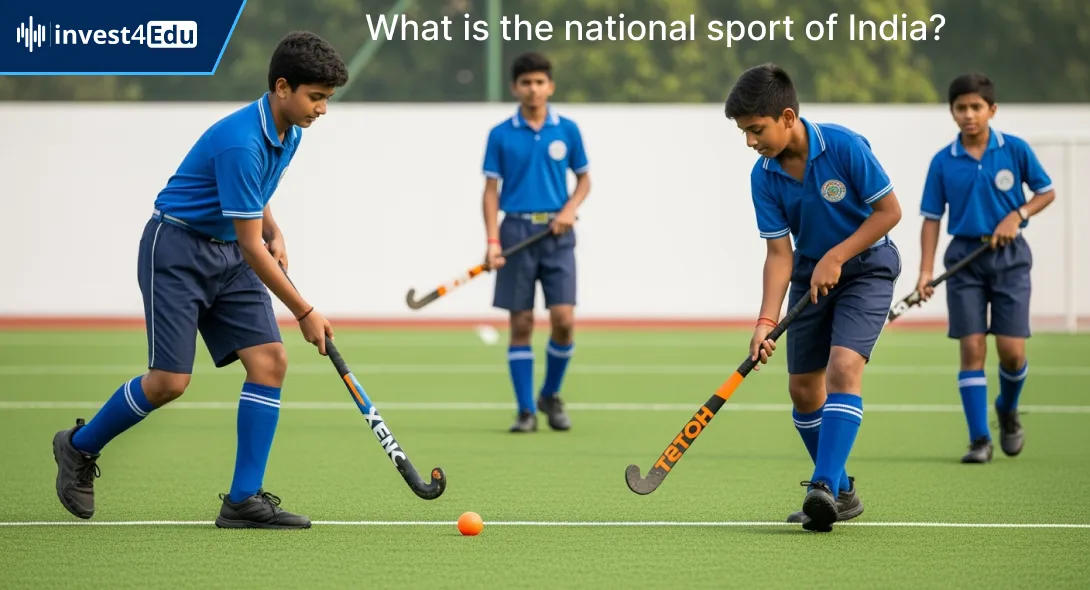
When it comes to sports, most people immediately think of Hockey. In schools, quiz competitions, and casual discussions, the answer to “what is India’s national sport?” is often Hockey. But is Hockey really the official national sport of India? No, if we talk officially, India does not have any declared national sport or game.
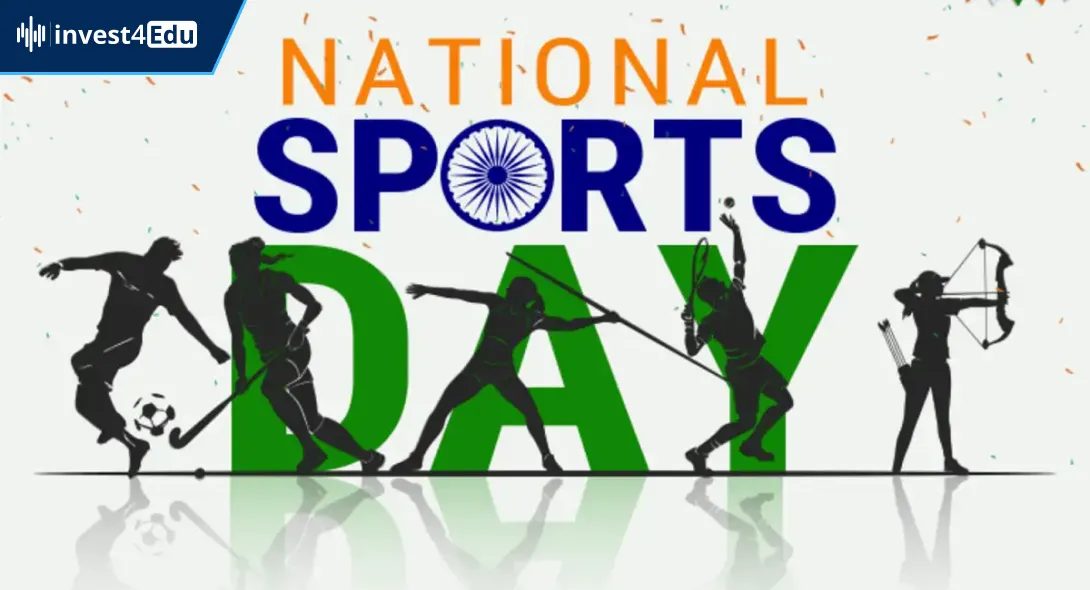
This raises a key question: why does India celebrate National Sports Day? National Sports Day is celebrated in India to honour the birth anniversary of hockey legend Major Dhyan Chand, not because India has a designated national sport. During the early and mid-20th century, India excelled in hockey at the Olympics, winning multiple Gold, Silver, and Bronze medals. Legendary players like Dhyan Chand brought international recognition to the country.
Although no sport is officially declared as India’s national game, hockey remains deeply ingrained in the consciousness of Indians and continues to symbolise the country’s sporting pride and legacy.
National Sport of India
India's national game, hockey, is often up for discussion in school classes, quiz contests, or among sports lovers. Many people mistakenly believe that hockey is the official national sport of India, but it is still more complicated than that. Hockey has provided India with a tremendous amount of iconic international recognition over the decades as a dominant sport and was a significant part of the sporting cultural fabric of India. Still, there is no declared national sport that is the official national game of India. No government notification or legal declaration exists that recognises any sport as a national game.
Certainly, hockey established itself primarily because of India's performance in international competitions (especially the prestigious Olympics), where the national team was exceedingly successful time after time. Therefore, there has ultimately been a wider discussion the anecdotal connectedness of hockey and the identity of Indian sport substantially correlated with it. There is a grey area of recognition in hockey, which is generally recognised as a national sport for these reasons; however, technically and officially, India does not have a 'national sport' game.
What is India's National Sport?
The question "Does India have a national sport?" has stumped many individuals for decades. Despite what many believe, India does not have an officially recognised National Sport. Countries that declare a national sport do so through their own government legislation; India has never made an official declaration.
Hockey is widely recognised as being synonymous with India's sporting identity, thanks to its great historical significance, in particular its success. The Indian hockey team had an unparalleled grip on international hockey from 1928, when they won gold at the Amsterdam Olympics, up through 1956, when they won gold at the Melbourne Olympics. Legendary players like Dhyan Chand, known as "The Wizard of Hockey," have developed into national icons and have contributed to hockey's popularity across the country.
It is this cultural context that leads many to believe that hockey is India's national sport. However, it is essential to distinguish between tradition and formal recognition. Hockey emphasises India's sporting excellence and legacy; however, formally, India does not have a national sport, and thus it is more a matter of pride than a legal requirement.
Why is There No National Game in India?
India does not have an officially recognised national sport, which is an endorsement for our country's sporting diversity and inclusivity. When we designate one sport with special status, we lose out on promoting participation and growth in multiple sporting activities. Often, people will refer to hockey as our national game due to the Olympic success over the years. Still, the Ministry of Youth Affairs and Sports has confirmed that there is no official national game status in India.
Here’s why India has no national sport:
Sporting Diversity: India has many popular sports, including cricket, hockey, kabaddi, wrestling, and badminton. If we declare one as the national game, we risk legitimising one sport and overshadowing the rest.
Inclusive Government Policy: By avoiding a national sport, the government does not imply one sport over the others, and all levels of sport can be planned around and supported through funding and development opportunities
Confirmation of No National Sport: The Ministry of Youth Affairs and Sports utilised an RTI on July 15th, 2020, and confirmed no sport has been recognised as the national game
Hockey and the Realities: While hockey has enjoyed strong public support and success at the Olympic Games, it will not make it the national sport.
No Requirement to Support a National Sport: Many other countries, including the USA, China, and Japan, do not have an official national sport, so it is not a requirement for India.
Hockey Successes in India
India boasts a glorious history in field hockey, making it one of the most successful teams in the world. For most of the early and mid-20th century, the Indian Men's Hockey team was known for its dominance and great success in the Olympic games, as well as international and continental tournaments, giving national pride and importance to hockey in India and making this sport part of India's sporting identity, and one of the significant reasons that whenever cultures discuss the sporting identity of India, hockey is often referred to as the national game of India.
Major Achievements:
Olympic Games: 8 Olympic Golds, 6 Silver and 4 Bronze - and, historically, six consecutive Olympic golds from 1928 to 1956.
Hockey World Cup: 1975 - Hockey World Cup Men's, (1975).
Asian Games: 4 Gold Medals in 1966, 1998, 2014, 2022.
Asian Champions Trophy: 5 (2011, 2016, 2018, 2023, 2024).
The Legacy of Hockey in India
Indian history of sport suggests that hockey is an essential part of sporting history in India that symbolises nothing but excellence and pride. India was a dominant force in international hockey from the late 1920s until the 1970s, winning a variety of Olympic medals and achieving a World Cup title. Sport and culture rose to new heights. The sport continues to inspire generation after generation whilst continuing to shape the identity of India on the world stage.
Key highlights of the legacy of hockey in India:
Period of Dominance: India won six Olympic gold medals in consecutive events from 1928 to 1956 and began a unique and glorious period in the history of the sport.
Olympic Medals: India has an all-time tally of eight gold, one silver and three bronze Olympic medals as an indicator of the depth of success at the elite level.
The World Cup: India won their first Hockey World Cup in 1975, further solidifying their position as a hockey powerhouse.
Cultural Impact: Hockey ingrains national pride and celebrates communities that come together to support and fan, reflecting culture and connectedness across generations.
Youth Development in Hockey: New programs and organisations continue to provide development for youth and ensure hockey exists beyond each generation.
Popular Sports in India
India has a great sporting culture with something for everyone. Hockey has a rich history, but now there are so many sports that captivate millions of people nationally. The plethora of both traditional and modern international sports in which India has produced world-class athletes, and continues to foster its talent in professional sport, makes analysing the most famous sport in India and its growing popularity exciting.
Key Popular Sports in India:
Cricket: Cricket is the most popular sport in India by a considerable margin, with multiple domestic leagues like the IPL as well as international competitions, followed with a passion by millions of fans. Cricket is a sport that unites the country and has seen the emergence of iconic players like Sachin Tendulkar and Virat Kohli.
Football: Football is rapidly growing in popularity in India nationally, especially in states like Kerala, West Bengal, and Goa. The Indian Super League (ISL) and other local clubs have helped engage fans and players.
Badminton: India has solidified its place as a leading contributor to global badminton, with India's P.V. Sindhu, Kidambi Srikanth, and Lakshya Sen all bringing home international medals.
Kabaddi: A conventional Indian sport, fast gaining worldwide recognition through the Pro Kabaddi League in India, with continued interest among younger generations.
Wrestling and Athletics: India has produced several Olympic medallists and champions in wrestling, athletics, and track-and-field events, which bodes well for India's sporting pride as a nation.
Conclusion
Hockey has played a remarkable role in shaping India’s sporting history. From winning multiple Olympic medals to inspiring generations with legendary players like Dhyan Chand, hockey remains a symbol of excellence, pride, and national achievement. While many people consider hockey to be India’s national sport, it is essential to understand that India does not have any officially declared national sport. The country continues to celebrate multiple sports, from cricket and football to badminton and kabaddi, reflecting India’s diverse sporting culture. Hockey’s legacy, however, remains unmatched, and it continues to inspire young athletes across the nation. Understanding this distinction helps appreciate the rich heritage of Indian sports while recognising the cultural importance of hockey in India.