STEM education has become one of the most preferred academic choices worldwide due to its strong career prospects, excellent return on investment, and industry-relevant curriculum. With technology and innovation shaping almost every sector, graduates from STEM backgrounds continue to remain in high demand across global job markets.
For students planning to study abroad, STEM programmes offer added advantages such as international exposure, practical learning, extended post-study work options, and clear career progression. These benefits make STEM an attractive pathway for students aiming to build long-term, globally recognised careers.
This blog explains what STEM education is, the subjects covered under STEM, top STEM courses abroad, popular study destinations, eligibility criteria, and the career opportunities available after completing a STEM degree.
If you’re unsure which STEM course or country aligns best with your academic profile, career goals, and budget, seeking expert guidance early can help you make a confident and well-informed decision.
What Is STEM Education?
STEM education is an integrated learning approach that focuses on Science, Technology, Engineering, and Mathematics. Rather than treating these subjects as separate disciplines, STEM education combines them to help students apply theoretical knowledge to real-world problems.
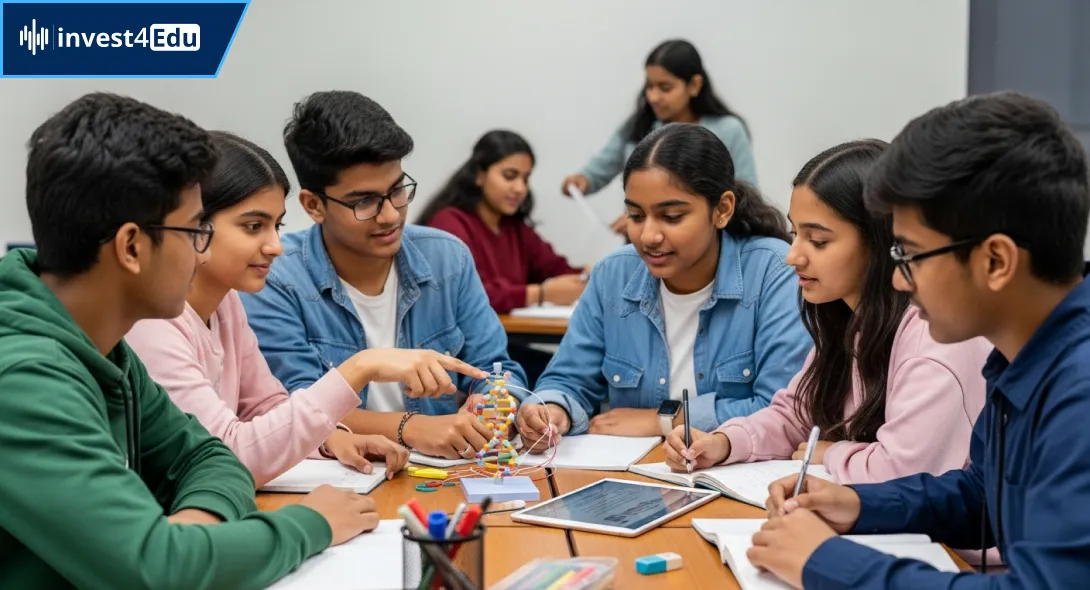
In STEM learning, students are encouraged to explore concepts through hands-on projects, experiments, research, coding, and problem-solving activities. This approach helps learners understand not just what to study, but how and why concepts are used in real-life situations.
Simply put, STEM education prepares students for modern careers by developing analytical thinking, technical skills, and innovation, making it one of the most relevant education pathways today.
Why STEM Education Is Important Today
Now The world is increasingly driven by technology, data, automation, and innovation. From healthcare and finance to energy and transportation, nearly every industry now relies on STEM-based solutions.
STEM education is important today because it:
- Prepares students for future job markets
- Addresses global skill shortages in technology and engineering
- Encourages innovation and research
- Helps students adapt to rapid industry changes
With emerging fields such as artificial intelligence, cybersecurity, renewable energy, and health technology growing rapidly, STEM education equips students with skills that remain relevant over time.
Key Benefits of STEM Education (Real-World Outcomes)
STEM education helps students develop practical, job-ready skills by combining theoretical knowledge with real-world application. It builds critical thinking, problem-solving, and innovation skills that are highly valued by employers across industries.
Here are the benefits of STEM education that actually matter for students and parents:
1) Stronger Problem-Solving and Critical Thinking
STEM encourages students to analyse a problem, break it down, and find workable solutions, skills that help in academics and careers.
2) Future-Ready Career Opportunities
STEM connects directly to fast-growing careers like data science, renewable energy tech, and advanced healthcare roles.
3) Better Teamwork and Communication
Many STEM projects are group-based, which improves collaboration, communication, and decision-making key workplace skills.
4) Practical, Hands-On Learning (Beyond Textbooks)
STEM learning is built around experiments, prototypes, projects, and real applications making learning more engaging and meaningful.
5) Helps Students Build a Strong Portfolio
This portfolio matters a lot for admissions and job readiness. A STEM-focused student can show outcomes like:
- Projects (apps, models, designs)
- Hackathons / competitions
- Research / internships
- Certifications (coding, analytics, cybersecurity)
What Subjects and Fields Come Under STEM?
STEM fields focus on applying scientific knowledge, technology tools, engineering principles, and mathematical logic to solve real-world problems and build future-ready careers. STEM is not one single subject. It includes many subjects and fields, such as:
|
STEM Category |
Key Fields |
|
Science |
Physics, Chemistry, Biology, Environmental Science, Biotechnology, Microbiology |
|
Technology |
Computer Science, Information Technology, Artificial Intelligence, Data Science, Cybersecurity, Cloud Computing |
|
Engineering |
Mechanical Engineering, Civil Engineering, Electrical Engineering, Electronics & Communication, Robotics, Mechatronics, Aerospace |
|
Mathematics |
Applied Mathematics, Statistics, Computational Mathematics, Data Analytics, Actuarial Science |
STEM vs STEAM
Some schools also use STEAM (STEM + Arts/Design) to add creativity, product design, and communication into technical learning particularly useful for innovation and entrepreneurship.
Popular STEM Courses After Class 12 (UG Options)
Students completing Class 12 with PCM or PCB can choose from multiple STEM fields based on their subject combination and entrance exam performance. PCM students typically pursue engineering and technology courses through JEE or state-level exams, while PCB students enter medical, biotechnology, and life science pathways through NEET or CUET, offering strong career scope in India and abroad.
If you are choosing a STEM degree after 12th (Science stream typically), here are common high-demand options:
Engineering & Tech (Most Chosen)
- B.Tech / BE in Computer Science, IT, AI & ML, Data Science
- B.Tech in Electronics & Communication, Electrical, Mechanical, Civil
- Robotics / Mechatronics (in selected universities)
Science-Focused Degrees
- BSc in Computer Science / Data Science / Statistics
- BSc Biotechnology / Microbiology / Bioinformatics
- BSc Physics / Chemistry (often leads to research or specialised masters)
New-Age, Emerging STEM Courses (Growing Fast)
- Artificial Intelligence & Machine Learning
- Cybersecurity & Digital Forensics
- Cloud Computing / DevOps
- Internet of Things (IoT)
- Renewable Energy / Climate Tech
- Health Tech / Biomedical Engineering
- Quantum Computing (limited but expanding)
Best STEM Courses for Study Abroad
Many students specifically look for STEM programs abroad because of advanced labs, research exposure, industry links, and stronger global mobility in certain domains.
Some of the most popular study STEM abroad course areas include:
- AI, Data Science, Machine Learning
- Computer Science / Software Engineering
- Biomedical / Biotechnology
- Engineering (Mechanical, Civil, Electrical, Aerospace)
- Environmental Science / Sustainability / Renewable Energy
And yes, country choice matters. Many competitor guides focus heavily on countries, fees, and visas. If you want a quick shortlist of popular destinations frequently discussed for STEM, you’ll often see the USA, UK, Canada, and Germany mentioned due to strong universities and job ecosystems.
STEM Careers: Roles Students Can Target
STEM education leads to diverse career opportunities across technology, engineering, science, healthcare, and emerging digital fields. Today’s STEM careers go beyond traditional roles, offering specialised, high-growth positions with strong career progression in India and abroad.
Here’s a realistic view of STEM careers (not just “engineer” or “scientist”):
|
Career Category |
Job Roles |
|
Technology Careers |
Software Developer / EngineerData Analyst / Data ScientistAI / ML EngineerCybersecurity AnalystCloud Engineer / DevOps Engineer |
|
Engineering & Core Careers |
Mechanical EngineerElectrical EngineerCivil EngineerProduct Design EngineerRobotics EngineerAutomotive / EV Engineer |
|
Science & Healthcare-Linked Careers |
Biotech Analyst / Research AssociateClinical Data SpecialistBiomedical EngineerEnvironmental Analyst |
|
High-Growth Hybrid Roles (STEM + Business) |
Product Manager (Tech)Business Analyst (Tech + Data)UX Researcher (Tech + Psychology + Data) |
Core Skills Needed to Succeed in STEM Fields
In many job markets, employers openly report difficulty hiring for digital/engineering skills showing why skill-based STEM learning matters. While marks help, but skills decide long-term growth in STEM careers. Strong STEM learners typically build:
- Analytical thinking
- Coding literacy (even basic Python helps)
- Data sense (charts, trends, decision-making)
- Research mindset (asking “why” and “how”)
- Project building (from idea to output)
- Collaboration + presentation
What’s Changing in STEM Education in India?
In India, STEM interest is rising because:
- schools are adding coding, robotics, and practical learning modules,
- students are more aware of global career options,
- parents are actively looking for stable, high-demand career paths.
At the same time, many students still struggle because they focus only on exams and not enough on projects, skills, and exposure. The best approach is a balance: strong academics + practical skills + profile building.
How to Choose the Right STEM Path
This practical method helps you choose better than blindly following trends:
1. Pick your strength zone
- Strong in maths + logic → CS, Data Science, AI, Engineering
- Strong in biology → Biotech, Biomedical, Health Tech
- Strong in physics + problem-solving → Core Engineering, Robotics, Aerospace
2. Check your learning style
- Prefer hands-on building → Engineering / Robotics / IoT
- Prefer research and labs → Science / Biotech / Physics
- Prefer digital problem-solving → CS / Data / Cybersecurity
3. Match with career outcomes
- Don’t choose a course only because it’s popular.
- Choose it because you can see yourself doing the work daily.
How invest4edu will help students and parents in STEM education
invest4Edu supports students and parents at every stage of their STEM education journey through personalised career counselling, course and country selection, study abroad guidance, and structured financial planning for education. It helps families understand the long-term costs, returns, and career outcomes of STEM degrees, ensuring informed decisions from school to higher education. By combining academic planning with financial readiness, invest4Edu enables students to build strong STEM profiles and pursue global opportunities with confidence.
Conclusion
STEM education is not just a “course choice” it’s a mindset that prepares students for real-world problem solving, innovation, and future careers. Whether your goal is to build a strong career in India or explore STEM programs abroad, the best results come from combining the right course with the right skills and consistent project work.