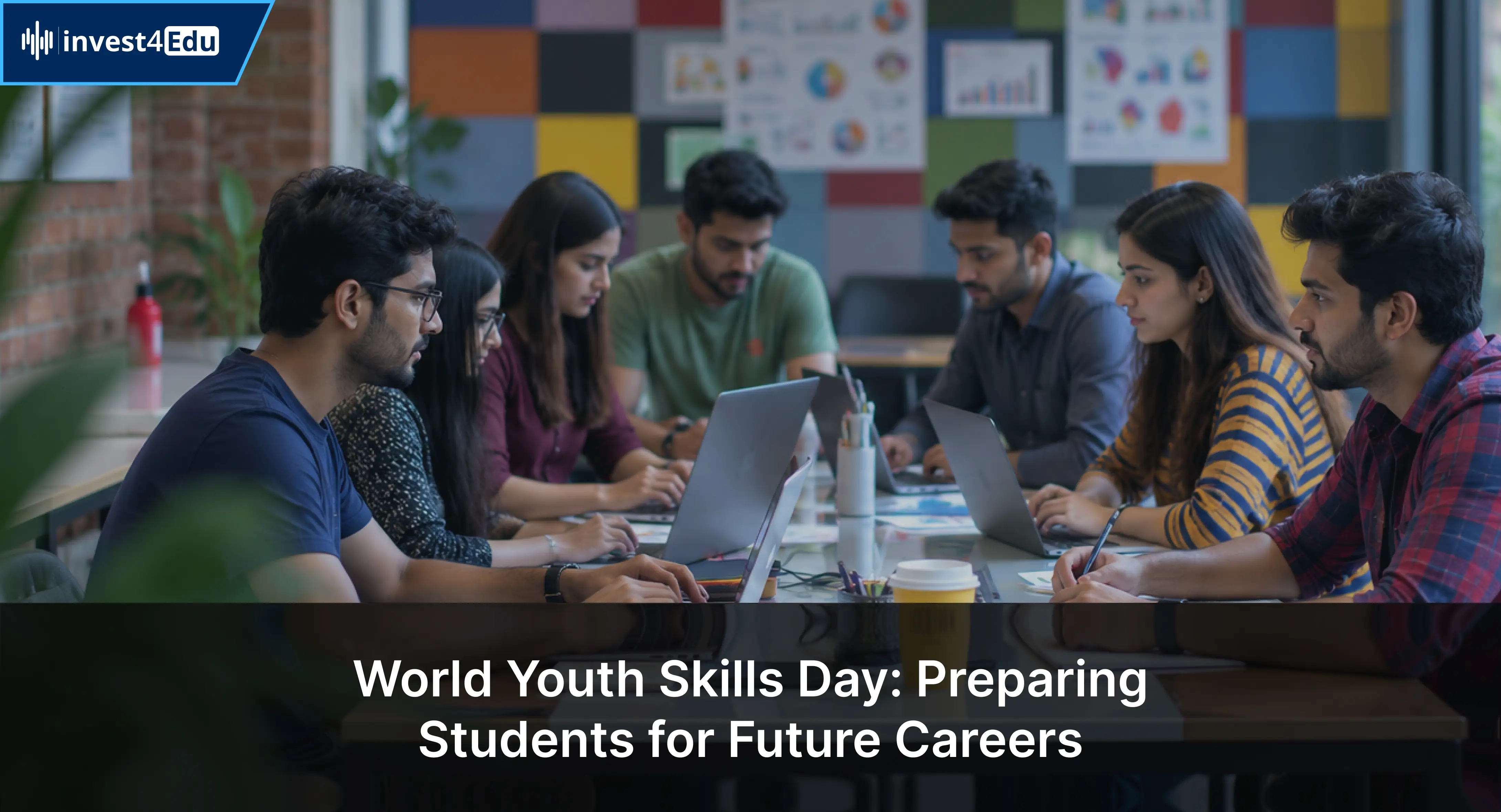
Skill development program refers to organized efforts designed to enhance the abilities and knowledge of individuals, especially the youth, to make them more employable and self-reliant. Skill development includes practical training, technical expertise, and personal growth, enabling young individuals to face the ever-evolving challenges of the professional world.
The youth is rightly regarded as the backbone of any country, but a country in which the youth is not properly trained can only harness its full potential to a limited extent. In this regard, a good skill development program provides the youth with a pathway that optimises their innate talents and allows them to progress in their career aspirations.
What is Skill Development?
Skill development is the process of enhancing and acquiring new abilities, competencies, and knowledge that improve an individual's performance and adaptability in various tasks and industries. It involves targeted training and education to prepare individuals for the demands of the workforce, equipping them with practical, job-related skills as well as broader soft skills like communication, teamwork, problem-solving, and leadership.
For youth, skill development is especially important as it empowers them to meet current job market requirements, fosters economic independence, and contributes to overall personal growth. Effective skill development initiatives not only increase employment opportunities but also play a significant role in economic development and nation-building by creating a capable, dynamic workforce.
Why Skill Development is Important for Youth Employment?
Skill development is crucial for youth employment because it bridges the gap between formal education and real-world job requirements, making young individuals more employable and competitive in the workforce. Here’s why it matters:
-
Meeting Job Market Demands: With technology and industry standards constantly evolving, employers seek candidates with specific technical skills and practical knowledge. Skill development programs ensure that youth are equipped with relevant skills, making them more adaptable and valuable in a fast-changing job market.
-
Reducing Unemployment: By providing youth with the skills needed for in-demand jobs, skill development programs lower unemployment rates and provide young people with sustainable career opportunities. This is particularly important in regions with high youth unemployment.
-
Fostering Entrepreneurship: Skill development doesn't only focus on employment; it also empowers youth to create their own businesses. Entrepreneurial skills like financial literacy, marketing, and management allow youth to start and grow their own ventures, creating jobs for others as well.
-
Enhancing Earning Potential: Skills relevant to high-demand sectors often lead to better-paying jobs. By acquiring these skills, young people improve their earning potential, which leads to financial independence and a higher standard of living.
-
Boosting Confidence and Productivity: Skill development fosters confidence by enabling youth to perform tasks with competence. It also enhances productivity, as skilled individuals can contribute more effectively and efficiently to their organizations.
-
Contributing to Economic Growth: A skilled workforce is the backbone of a nation's economy. When youth are equipped with the right skills, they contribute to higher productivity, innovation, and competitiveness, driving economic growth and national progress.
Role of Youth in Nation's Development
Youth play a crucial role in the progress and growth of a nation. They are often seen as the driving force behind innovation, change, and economic development. By participating in skill development programs, young people gain the skills and confidence necessary to make meaningful contributions to society, driving the nation forward.
The role of youth in nation-building goes beyond merely contributing to GDP. Skilled youth can solve real-world problems, foster a culture of entrepreneurship, and lead community initiatives that uplift marginalised populations. A productive youth population can also help alleviate social issues such as poverty and unemployment by creating job opportunities for others through entrepreneurship.
Furthermore, when young people are given the opportunity to acquire skills that align with job market needs, they are better positioned to reduce reliance on external resources, thereby contributing to national self-reliance. Empowering youth with skills fosters innovation across diverse fields, including technology, agriculture, education, and healthcare, making them active participants in building a sustainable future for all.
Technological Advancements in Skill Development
The use of technology in skill development has evolved dramatically over the years. The use of e-learning resources, remote training, and virtual placements has helped millions of youths gain skills that were out of reach in the past. A skill development program today implemented by its earliest developer should be able to integrate tools such as VR and even AR to enhance the efficiency of learning.
AI and data analytics are also being used to analyse learners’ capabilities and tailor training to the individual. As a result, technological advancement has made learning in skills development universal and has reduced the divide between the rural and the urban youth. It has also enabled the deployment of programs that can be replicated in different regions so that no youth is left behind.
Policies of Government in Facilitation of Skill Development
The government has launched a range of policies and initiatives to empower youth through skill development, aiming to bridge the gap between education and employability and support national growth. Here are a few of the most significant programs by the government focused on skill development for youth:
1. Skill India Mission
Objective: Launched in 2015, this mission aims to equip over 400 million people with job-relevant skills. It is an umbrella initiative that aligns various skill development programs and policies.
Key Components: Includes major schemes like Pradhan Mantri Kaushal Vikas Yojana (PMKVY) and the National Skill Development Mission, emphasising vocational training and formal skill accreditation.
2. Pradhan Mantri Kaushal Vikas Yojana (PMKVY)
Overview: PMKVY is the flagship program under Skill India, focused on providing short-term skill training for jobs.
Features: Offers financial incentives for completing courses, Recognition of Prior Learning (RPL), and industry-aligned certification to make young people job-ready.
Impact: Provides millions with practical skills for high-demand sectors, such as IT, healthcare, and manufacturing, bridging the gap between education and employability.
3. Deen Dayal Upadhyaya Grameen Kaushalya Yojana (DDU-GKY)
Purpose: This program is tailored for rural youth, particularly from economically disadvantaged backgrounds.
Features: DDU-GKY provides free vocational training in various fields, such as retail, healthcare, and tourism, with job placement support.
Objective: It not only aims to enhance job skills but also contributes to poverty alleviation by connecting rural youth to urban job markets.
4. National Apprenticeship Promotion Scheme (NAPS)
Goal: NAPS encourages practical training through apprenticeships, with financial support and incentives for employers.
Significance: Helps bridge the gap between theoretical education and practical experience, making it easier for youth to transition into the workforce.
5. Atal Innovation Mission (AIM)
Objective: AIM promotes a culture of innovation and entrepreneurship among youth, especially through Atal Tinkering Labs set up in schools.
Impact: Encourages young students to experiment with technology and build solutions, promoting hands-on learning and technical skill development.
These key programs are designed to provide structured skill training, enhance employability, and encourage innovation, aiming to prepare India’s youth for both traditional and emerging job markets.
How Different Stakeholders Contribute to Skill Development ?
The success of any skill development program depends on the collaborative efforts of various stakeholders, including educational institutions, industries, government bodies, and NGOs. Educational institutions play a key role in laying the foundation of learning. However, they need to adapt their curricula to match the evolving needs of industries.
Industries also play a crucial role by offering internships, apprenticeships, and on-the-job training opportunities. Their involvement ensures that the skills imparted are relevant to market demands, thereby enhancing employability. NGOs and other community organizations help make skill development initiatives more inclusive, reaching youth in underserved areas and providing resources that may not otherwise be available.
Future Scope and Trends in Skill Development for Youth in India
The future of skill development for youth in India is vibrant and full of potential, largely driven by technological innovations, evolving job market requirements, and government initiatives. Here are some key trends and areas that are likely to shape the future of skill development:
1. Digital Literacy and Emerging Technologies
As India continues its digital transformation, there is an increasing demand for digital literacy among the youth. Skills in areas such as artificial intelligence, data science, blockchain, and cybersecurity are becoming crucial. Programs focusing on these technologies will become more mainstream to ensure that the youth are prepared for the future job market.
2. Focus on Soft Skills
Apart from technical skills, there is a growing recognition of the importance of soft skills such as communication, teamwork, and problem-solving. Future skill development programs will increasingly integrate soft skills training to enhance the overall employability of youth, making them more adaptable in various professional settings.
3. Upskilling and Reskilling
With the rapid pace of technological change, continuous upskilling and reskilling will become essential. Many jobs today require workers to adapt to new tools continuously and processes. Skill development programs will focus on providing flexible, modular courses that allow young individuals to keep up with industry changes and pivot as needed.
4. Integration of Technology in Training
Technologies like Virtual Reality (VR) and Augmented Reality (AR) will continue to enhance skill development programs by providing immersive, hands-on training experiences. Online learning platforms will also grow, offering more accessible learning opportunities for youth across urban and rural areas.
5. Industry-Academia Collaboration
Collaboration between educational institutions and industries will play a key role in ensuring the relevance of skill development programs. More partnerships are expected to emerge, where industries provide practical insights and opportunities, and academia focuses on building foundational knowledge.
6. Entrepreneurship and Gig Economy
In the wake of the gig economy, emerging skills that facilitate freelancing and entrepreneurship are becoming more pronounced. Skill development programs will take on shaping the youth’s digital marketing, financial management, and project management in preparation for the flexibility and independence that gig work offers.
7. Government Initiatives and Funding
The role of government will remain fundamental in the sustenance and expansion of skill development programs. Raising the level of funding, bringing incentives to private players, and new initiatives will assist in scaling these programs. Government efforts will also include provision of skill development opportunities to rural youth, women and marginalised communities in an attempt to achieve inclusivity.
8. Green Skills and Sustainability
With the changing world, a progressively increasing number of green skills will become necessary. The youth will require to be equipped with skills on renewable energy, waste management, sustainable agriculture among many other things. Skill development programs will evolve such that there will be integration of skills training towards the local and international sustainable development goals.
Conclusion
The reason for developing skills goes beyond creating employment, it’s building a nation ready for the future. A skill development program that is strategically structured drives the youth to be productive members of their families, society and the nation. Technical skills, soft skills or even business initiatives, skills development provides the opportunity to develop into a better tomorrow – a better tomorrow for all.
Invest4Edu offers career counselling to students, helping them identify and develop the skills they need for a successful future. Join us today to take the first step towards your skill development journey.