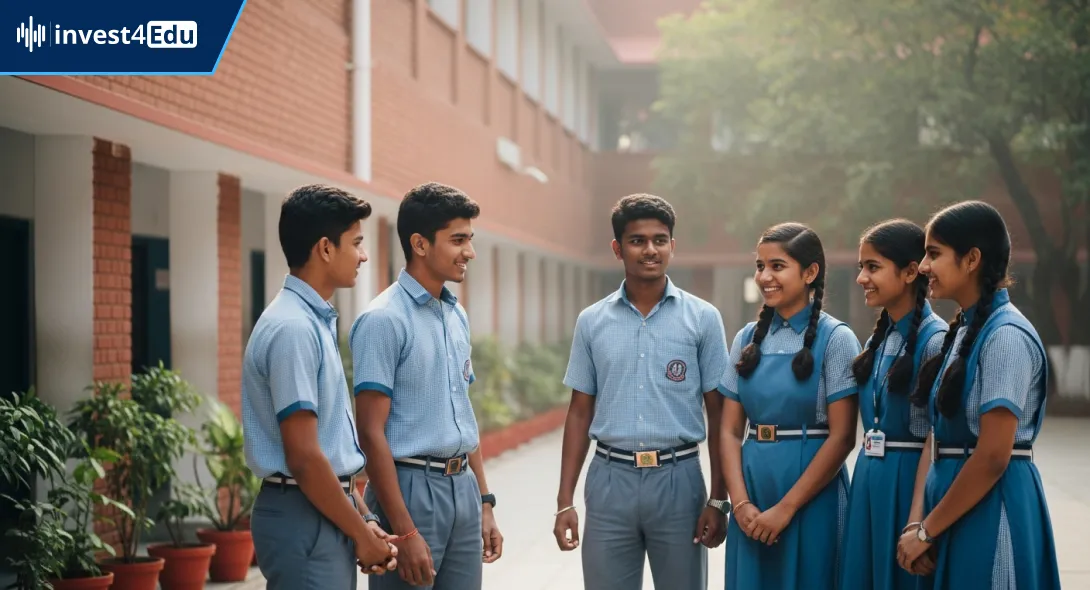
Choosing the right education board is one of the most important decisions parents make for their children, as it lays the foundation for their future success. This choice can often feel overwhelming with a wide range of education boards available in India, such as CBSE, ICSE, State Boards, and international boards.
In recent years, there has been a noticeable shift in Indian parents' preferences. Many are now exploring global options that go beyond traditional classroom learning. The International Baccalaureate (IB) programme has gained significant attention for its unique, inquiry-based approach to education.
But what exactly is an IB school? How is it different from the other boards available in India? And more importantly, should you consider sending your child to one? In this blog, we break down everything you need to know about IB board schools in India so that you can make an informed and thoughtful decision for your child's future.
What Is the IB Board?
The International Baccalaureate (IB) is a globally recognised education board focusing on building essential life skills like critical thinking, creativity, and problem-solving. Founded in 1968, the IB programme aims to prepare students for a fast-changing and connected world by offering a well-rounded, practical, and student-friendly approach to learning.
The IB curriculum is divided into four main programmes:
- Primary Years Programme (PYP) – For children aged 3 to 12 years
- Middle Years Programme (MYP) – For students aged 11 to 16 years
- Diploma Programme (DP) – For students aged 16 to 19 years
- Career-related Programme (CP) – For students aged 16 to 19 years, with a focus on career and vocational training
In India, many IB schools offer the PYP, MYP, and DP, covering education from primary to senior secondary levels. These programmes are designed to help students become independent learners, confident speakers, and global citizens.
Why Choose an IB School in India?
IB board schools in India are gaining popularity because they offer more than just academics. These schools focus on a child's overall development, helping them grow intellectually, emotionally, and socially. The IB curriculum encourages students to think for themselves, ask questions, and understand the world around them.
Here are some key reasons why parents choose IB schools in India:
- Holistic Development: Focuses on students' mind, body, and emotional well-being.
- Global Outlook: Teaches students to respect other cultures and think globally.
- Critical Thinking: Encourages students to explore, question, and solve real-life problems.
- Skill Building: Builds communication, leadership, and teamwork skills.
- Worldwide Recognition: IB is accepted by top universities across the globe.
- Smaller Class Sizes: Offers personal attention through a lower student-teacher ratio.
- Balanced Curriculum: Includes academics, art, sports, and practical learning.
- Research and Inquiry: Projects and research work promote curiosity and independent learning.
What Sets IB Schools Apart from Traditional Schools?
IB schools in India follow a modern, student-centred learning approach. Here’s a quick comparison to help you understand the key differences.
Aspect | IB Schools | Traditional Schools |
Learning Style | Inquiry-based learning that encourages questions, exploration, and creativity | Structured learning with focus on subject knowledge and clear guidance |
Teaching Approach | Student-centred, cross-disciplinary, with global themes | Teacher-led, subject-specific, focused on mastering the syllabus |
Assessments | Mix of presentations, projects, essays, and real-world tasks. | Mostly written exams and standardised tests. |
Curriculam | Broad and balanced, includes critical thinking and global topics. | Focuses on core subjects based on national or state guidelines. |
Student Development | Focus on overall development – academic, personal, and social | Emphasises academic success, with growing attention to extra activities |
Pros and Cons of Sending Your Child to an IB School
Choosing an IB school is a big decision. While IB programmes offer unique opportunities, they may not suit every child or family situation. Here’s a simple breakdown of the advantages and possible challenges to help you decide better.
Pros of Sending Your Child to an IB School
Choosing an IB school for your child offers several benefits that can help them grow academically and personally. Here's a look at some of the key advantages:
- Global Recognition: IB qualifications are accepted by top universities across the world, making it ideal for students planning to study abroad.
- Strong Focus on Research Skills: Students learn how to conduct independent research early, preparing them for university-level academics.
- Language Learning: IB students study at least one additional language, which improves communication skills and cultural understanding.
- Learner-Centric Approach: The IB framework supports different learning styles and promotes self-driven learning and reflection.
- Creativity and Community Involvement: IB students take part in arts, sports, and service activities through the CAS (Creativity, Activity, Service) component, which builds confidence and empathy.
Cons of Sending Your Child to an IB School
While there are many advantages to IB schools, there are also a few challenges that parents should consider before making a decision:
- Higher Cost of Education: IB schools often charge higher fees due to international affiliations, teacher training, and facilities.
- Demanding Curriculum: The programme can be academically and emotionally challenging due to its broad and deep approach.
- Limited Availability: Not all cities in India have IB schools, which can limit access for families in smaller towns.
- Less Familiar Format: Indian universities may still be more accustomed to CBSE/ICSE grading styles, which are changing gradually.
- Time Management Pressure: With projects, essays, and extracurriculars, students may need to balance multiple responsibilities early on.
Top IB Schools in India
India has several top IB schools that offer high-quality education and modern learning environments. Here are some of the most well-known IB schools:
- Dhirubhai Ambani International School, Mumbai
- Pathways World School, Gurgaon
- The International School Bangalore (TISB)
- Oberoi International School, Mumbai
- Indus International School, Bangalore
These schools are known for their excellent teaching, global curriculum, and strong academic support.
How to Choose the Right IB School?
Finding the right IB school for your child can be easier when you know what to look for. You can make an informed decision by following a simple, step-by-step approach. Here's how:
1. Check IB Accreditation: Ensure the school is officially authorised by the International Baccalaureate Organisation (IBO). You can verify this on the IBO's official website.
2. Understand the Programmes Offered: Some schools offer only certain IB programmes, such as PYP, MYP, or DP. Choose a school that matches your child's current age and future needs.
3. Balance of Academics and Activities: Look for a school that values academics and extracurricular activities like sports, art, and clubs. IB encourages overall development.
4. Visit the Campus: A school visit helps you check facilities like classrooms, labs, libraries, sports areas, and digital tools. A good learning environment matters.
5. Know the Teachers: Well-trained teachers make a big difference. Ask about the staff's IB training, teaching experience, and qualifications.
6. Ask About Student Support: IB programmes can be challenging. Check if the school offers academic help, counselling, or career guidance.
7. Understand the Fee Structure: IB schools can be more expensive. Ask for a clear breakdown of fees, including tuition, meals, transport, uniforms, and other costs.
8. Look at Results and Placements: Check the school's past IB results and which universities its students attend. This will tell you about the school's academic quality.
9. Talk to Other Parents: Speak to parents whose children already study there. They can give honest feedback about the school's pros and cons.
10. Consider Location and Travel: Long travel hours can tire your child. Choose a school nearby with safe, reliable transport options.
Make the Right Choice with invest4Edu
Confused about which education board is right for your child? You're not alone—and we're here to help!
At invest4Edu, we make it easier for parents to decide with:
- Board Selection Counselling: Our experts will help you understand the differences between boards like IB, CBSE, ICSE, and others, so you can choose what's best for your child.
- Special Psychometric Test for Parents: We offer a Board Selection Test designed just for parents. This test helps you discover which board matches your child's learning needs, interests, and future goals.
- Personalised Guidance: There is no one-size-fits-all advice here. Before recommending the right path, we examine your child's strengths, personality, and learning style.
- Support for Study Abroad Goals: Planning for your child's global education? We help you pick a board that opens doors to top international universities.
Choosing the right board doesn't have to be stressful. Let invest4Edu guide you with expert advice and tools that work.
Conclusion
Choosing an IB school in India can be a great step for your child’s all-round development and future global opportunities. However, it’s important to evaluate your child’s needs, your long-term education goals, and the school’s offerings before making a decision.
With expert support from invest4Edu, you can confidently choose the right board for your child. From personalised Board Selection Counselling to our unique Psychometric Test for Parents, we help you make smarter, informed choices that shape a better future.