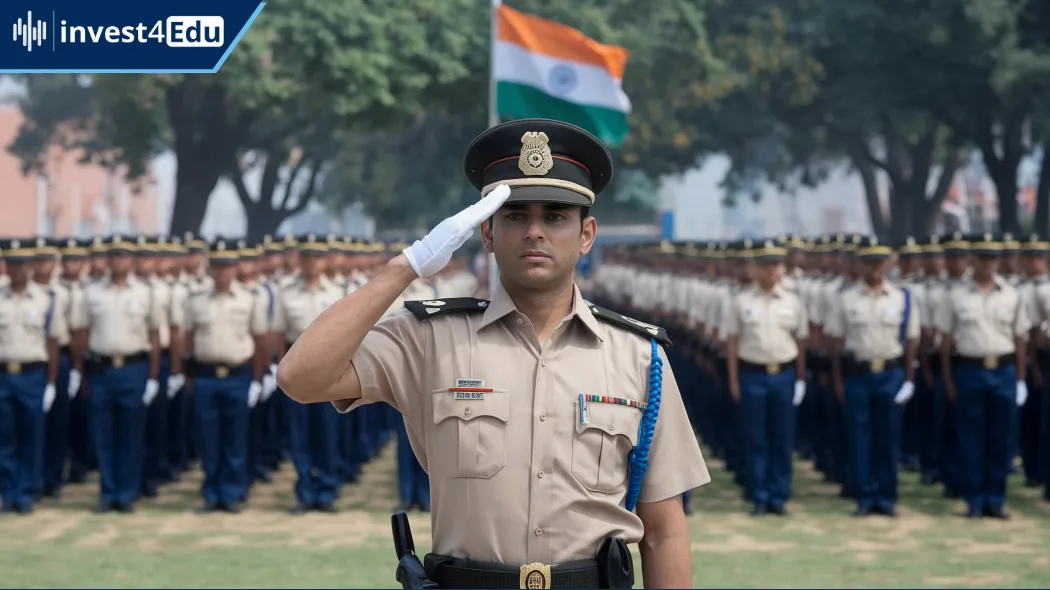
Are you a child who wants to start a career in the Indian Army, Navy, or Air Force, or is your child dreaming about a career in the Indian Army, Navy or Air Force? Becoming an officer in the armed forces is much more than a job. It is a journey of honour, discipline and excitement. In this blog, you will find out how to join the Indian Army after 12th, how to join the Indian Air Force after 12th, and how to join the Indian Navy after 12th. We will explain eligibility requirements, entry routes and the steps to start a successful career. Whether you are a student planning your future or a parent supporting your child, this article is designed to support you clearly and practically, refine your expectations and help achieve your career aspirations in the armed forces.
Understanding Defence Forces in India
Serving the nation through a career in the Indian Army, Navy, or Air Force is a noble and rewarding decision. Whether you are a student planning for your future or a parent helping your child, it is essential to understand the different ways to serve in the armed forces. You can look at ways to join the Army after 12th via NDA or other direct entry schemes. Alternatively, you can consider entering the Air Force via the Air Force wing of NDA or AFCAT, or the Navy via the 10+2 B.Tech Cadet Entry or the Navy wing of NDA. Below are the defence careers to consider:
- Indian Army – Safeguards the country’s land borders.
- Indian Navy – Protects India’s maritime boundaries.
- Indian Air Force – Ensures aerial defence and national security.
1. Indian Army: Your Initial Step to a Brave Career
The Indian Army is among the several respected institutions in the country. If you're considering joining the Army. There are several entryways to the Army depending on your education and choices.
Eligibility for the Indian Army
- To become part of the Army, an applicant must meet specific Indian Army qualifications:
- Age: 16.5 – 19 years for NDA; 19 – 24 years for other officer entries.
- Education: 10+2 (for NDA); Graduation (for officer entries)
- Nationality: Indian
- Physical standards: Fit according to medical standards.
How to Join the Indian Army after 12th
- The primary pathway is the NDA (National Defence Academy) for 12th pass candidates.
- Clear the written exam conducted by UPSC (Union Public Service Commission).
- Clear the SSB (Services Selection Board) interview.
- Complete the training and studies at NDA in Khadakwasla.
For Female candidates interested in joining the Indian Army after 12th, the Air Force currently offers officer training programs like AFCAT (Air Force Common Admission Test) and NCC Special Entry, providing opportunities to join the Air Force in various streams. Regular soldier entries (Army, Navy and Air Force) for females are also on the rise.
2. Indian Air Force: Reaching New Heights with your Ambitions
If you're interested in aviation and technology, the Indian Air Force (IAF) is for you. If you are looking into joining the Indian Air Force after 12th, there are several entry options for school students, as well as graduates.
Eligibility for the Indian Air Force
- Age: 16.5 – 19 years for NDA (Air Force wing); 20 – 24 years for graduate entry
- Education: 10+2 (NDA must be in the Science stream), Graduation for officer or technical positions
- Nationality: Indian
- Physical fitness: Medical and eyesight criteria
How to Join the Air Force after 12th?
- Pass the NDA exam, which the UPSC conducts.
- Pass the SSB (Services Selection Board) interview.
- Complete Training at NDA, Khadakwasla.
- Also, the NDA has other entry routes, while you could pursue NCC special entry to the Air Wing, be certified, and CDS (Combined Defence Services) for graduates.
3. Indian Navy: Anchoring Your Future
The Indian Navy offers a career at sea that is occasionally pursued, plus adventure, and also provides some technical and leadership chances. If you are wondering how to join the Indian Navy after your 12th, there are multiple ways available to begin.
Eligibility in the Indian Navy
- Age: 17 - 22 years for 10+2 entry;
- 19 - 25 years for graduate entry
- Education: 10 + 2 with physics, chemistry and mathematics for technical branches; Graduation for officer stream
- Nationality: Indian citizen
- Physical and Medical Standards: Must be as per official guidelines
How to Join the Indian Navy After 12th?
Major entry routes for 12th pass students are as follows:
- 10+2 (B.Tech) cadet entry scheme - For students intending to join technical branches.
- NDA (Navy Wing) - For 12th Science stream students.
- University entry scheme - For final year engineering students.
For graduates, the CDS entry is also available, and women can join specific officer roles through dedicated entry schemes.
Official Websites for Defence Recruitment Notifications
When preparing for a career in the defence, it is essential to stay updated with the official recruitment notifications. All applications, eligibility criteria, exam dates, and updates will be published on these websites, allowing candidates to manage their career paths effectively. Regularly checking these sites can help ensure that candidates are aware of important deadlines and requirements for these full-time government positions.
Below are the main websites for all branches of the defence services:
|
Service |
Entry/Exam |
Official Website |
What You Can Find Here |
|
NDA & CDS |
UPSC Exams |
upsc.gov.in |
Notifications for NDA (Army, Navy, Air Force wings) and CDS exams for graduates, exam dates, syllabus, and results. |
|
Indian Army |
Join Indian Army |
joinindianarmy.nic.in |
Information on Soldier, Officer, Technical, and TES entries, application forms, eligibility criteria, and SSB schedule. |
|
Indian Navy |
Join Indian Navy |
joinindiannavy.gov.in |
Updates on 10+2 (B.Tech), NDA Navy Wing, Graduate entries, and Navy technical/officer recruitment. |
|
Indian Air Force |
AFCAT Portal |
afcat.cdac.in |
Notifications for AFCAT (Flying and Ground Duty branches), technical and non-technical entries, eligibility, application process, and AFSB interview schedules. |
Defence Career Options After 12th
Completing class 12 allows access to careers in the defence, including the Army, Navy, and Air Force. There are several entry paths tailored for school graduates, combining academic training, physical preparation, and leadership development. Here are the main defence career options for 12th pass students:
1. National Defence Academy(NDA)
National Defence Academy (NDA) was by far the most prestigious choice for class 12 pass candidates who aspire to become officers in the Army, Navy or Air Force. It provides an opportunity to develop in many areas: academics, physical fitness, and military discipline.
|
Criteria |
Details |
|
Eligibility |
Class 12 pass with Physics and Mathematics for Navy and Air Force wings; Age 16.5 – 19.5 years; Indian citizen |
|
Selection Process |
NDA written exam conducted by UPSC → SSB (Services Selection Board) interview → Medical examination |
|
Training Duration |
3 years at NDA Khadakwasla, Pune → 1 year at respective service academy (Army, Navy, or Air Force) |
|
Career Opportunities |
Commissioned as officers in the Army, Navy, or Air Force with opportunities for leadership and advancement |
2. Technical Entry Scheme (TES) - Indian Army
The Technical Entry Scheme (TES) is intended for male individuals who excel in Physics, Chemistry and Mathematics at the 12th standard and are interested in joining the Indian Army as a technical officer. TES offers fast-track access to Technical Officer roles via engineering qualifying education and military basic training.
|
Criteria |
Details |
|
Eligibility |
12th pass with minimum 60% in PCM; valid JEE Mains score; Age 16.5 – 19.5 years; unmarried males |
|
Selection Process |
Shortlisting based on JEE Mains scores → SSB interview → Medical examination |
|
Training Duration |
4-year B.Tech program at designated Army engineering colleges → Commissioning as an officer |
|
Career Prospects |
Commissioned as Technical Officers in Army branches including electronics, mechanical, and civil engineering roles |
3. Indian Navy B.Tech Entry
Indian Navy B. Tech Entry is the best option if you are looking to work in a technical area at sea. Joined to a rigorous training and seagoing programme, you will earn a B.Tech degree and develop academic and technical skills
|
Criteria |
Details |
|
Eligibility |
12th pass with PCM; strong academic record; age 17 – 22 years; Indian citizen |
|
Selection Process |
Shortlisted based on JEE Mains scores → SSB interview → Medical test |
|
Training |
4-year integrated B.Tech program at the Indian Naval Academy (INA), Ezhimala, Kerala; combines academics, seamanship, and military training |
|
Career Opportunities |
Commissioned as officers in technical branches of the Navy, including Electronics, Mechanical, and Weapon Systems |
4. Agniveer Entry (All Services)
Agniveer entry scheme under Agnipath is the service entry option for all three services, Army, Navy and Air Force. It is a short 3-4 year process for young candidates to serve our nation better while acquiring experience both professionally and personally.
|
Criteria |
Details |
|
Eligibility |
Age 17.5 – 21 years; educational qualifications vary by trade (10th, 12th, ITI, or Diploma) |
|
Selection Process |
Physical fitness test → Written exam → Medical examination |
|
Tenure |
4 years, with the possibility of 25% absorption into the regular cadre based on performance |
|
Career Prospects |
Candidates gain exposure to military life, leadership skills, and can pursue further opportunities in defence or related fields. |
Joining Defence After Graduate
Graduating opens up several pathways to join the Indian Armed Forces as an officer. Key entry routes include the Combined Defence Services (CDS), AFCAT (Air Force Common Admission Test), NCC Special Entry, and specialised entries like JAG (Judge Advocate General) for law graduates. It’s essential to understand the eligibility, selection process, and training for each route to make informed decisions and start a career in the Army, Navy, or Air Force.
1. Combined Defence Services (CDS)
CDS is a much sought-after entry option with graduates to join the Army, Navy, or Air Force as an officer at the time of commissioning. They are great entry options for candidates who are seeking a combination of studies, physical activity and leadership training to pursue a career in defence.
- Eligibility: Graduation (B.Tech required for Navy; 10+2 Science for Air Force)
- Age Limit: 19–24 years (varies by service)
- Selection Process: Written exam → SSB interview → Medical Examination
- Training: Pre-commission training at IMA, OTA, INA, or AFA depending on service
2. Air Force Common Admission Test (AFCAT)
AFCAT is an examination which allows graduates to join the Indian Air Force as officers in both flying and ground duty branches. It is set up to help identify graduates who combine academic and technical knowledge with sufficient leadership potential.
- Eligibility: Graduation with minimum 60% (Engineering degree required for technical branches)
- Age Limit: 20–24 years (varies by branch)
- Selection Process: Written exam → AFSB interview → Medical Examination
- Training: Pre-commission training at Air Force Academy, Hyderabad
3. NCC Special Entry
This entry point is available for graduates holding an NCC 'C' certificate. This entry allows the applicant to be shortlisted for a direct SSB interview, suitable for motivated graduates and in a short period, they can become officers in the Defence forces.
- Eligibility: Graduation with minimum 50% + NCC ‘C’ certificate
- Age Limit: 19–25 years
- Selection Process: Direct SSB interview → Medical Examination
- Training: Pre-commission training at respective service academy depending on branch
4. JAG Entry – Indian Army
The JAG entry is aimed at law graduate applicants wanting to join the legal branch of the Army as officers and serve as Short Service Commission officers. It provides a specialised career that couples legal knowledge and expertise with military service.
- Eligibility: LLB with a minimum of 55% + registration; Valid CLAT PG score
- Age Limit: 21–27 years
- Selection Process: Application → Shortlisting → SSB interview → Medical Examination
- Training: Pre-commission training at OTA, Chennai
How invest4Edu help You Plan a Defence Career?
Navigating the complex entry routes for the defence can be challenging, whether it’s for how to join the Indian Army after 12th, or applying for the Indian Navy. invest4Edu offers comprehensive support to make this journey simpler and more effective:
- Psychometric Test: Assess your child’s strengths, interests, and aptitude to identify the most suitable defence and career paths.
- Career Counselling: Personalised guidance to choose the right entry route and plan preparation strategies.
- Financial Planning: Assistance in managing education and training expenses to ensure a smooth journey into the defence services.
- Education Journey Planning: Mapping out short-term and long-term academic and career steps for a successful defence career.
- Education Loan Support: Guidance to secure education loans for courses or preparatory training if needed.
- Application Assistance: Step-by-step help with forms, notifications, and meeting deadlines.
- Parent Support: Helping parents understand defence career options and plan effectively for their child’s future.
Conclusion
A career in the defence offers a unique blend of discipline, leadership, and the opportunity to serve the nation with pride. Whether you are exploring entry after class 12 or graduation, there are multiple structured pathways to join the Army, Navy, or Air Force, each with its own eligibility criteria, selection process, and training programs.
Success in defence careers requires early planning, dedication, and thorough preparation for exams and interviews. By understanding the available options, staying updated with official notifications, and focusing on physical, mental, and academic readiness, aspirants can confidently pursue one of the most respected and rewarding careers in India.