For many students, pursuing higher education in the United States is a dream that opens the door to endless opportunities. However, the path to achieving that dream often includes navigating the F-1 visa interview process, which can feel overwhelming at first. The good news is, with the right guidance and preparation, you can approach it with confidence. This blog is here to walk you through everything you need to know about acing your F-1 visa interview in 2025—from understanding the most common questions to avoiding pitfalls—all while keeping recent trends and changes in mind.
What is the F-1 Visa in the USA?
The F-1 Visa is a non-immigrant visa issued by the United States government to international students who wish to pursue full-time studies at an accredited U.S. institution. This visa allows students to attend academic programs, including undergraduate, graduate, and language training programs. It’s important to note that the F-1 visa is valid for the duration of your academic program, plus any optional practical training (OPT) period, which allows you to gain work experience related to your field of study.
With an F-1 visa, you are allowed to study in the U.S., work part-time on campus during your studies, and participate in post-graduation OPT, among other benefits.
What is the F-1 Visa Interview in the USA?
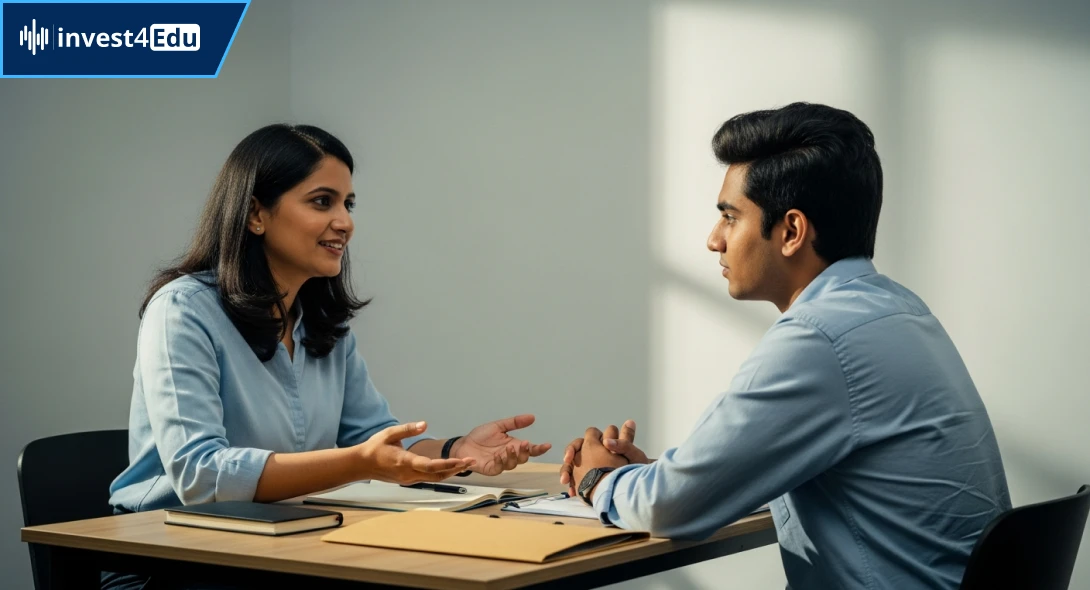
The F-1 visa interview is the key step in securing your student visa to study in the U.S. During this interview, you will meet with a consular officer at the U.S. embassy or consulate, who will assess your application and verify your eligibility for an F-1 visa. The officer will ask you a series of F-1 visa interview questions to determine your intentions and ensure you are a genuine student.
You will need to demonstrate to the officer that you meet the visa requirements, which include having enough financial support, an admission offer from a U.S. school, and the intent to return to your home country after your studies. A successful interview can significantly impact your ability to enter the U.S. as a student.
Preparing for the US F1 Visa Interview Day
Preparing for your U.S. F1 visa interview is an important step toward your academic journey in the U.S. Here are some tips to help you get ready:
1. Review Your Application and Documents
Before the interview, carefully check all the documents you've submitted. Make sure your Form DS-160, Form I-20, financial documents, and test scores are accurate and up-to-date. Familiarity with your application details will help you confidently answer questions during the interview.
2. Practice Common Interview Questions
Anticipate typical interview questions, such as:
- Why did you choose to study in the U.S.?
- How will you finance your studies?
- What are your academic and career goals?
Practice your answers to sound clear and concise. This will help you present yourself confidently and avoid rambling.
3. Prepare Your Documents
Make sure to bring all the necessary documents to the interview, including:
- Valid Passport (with at least 6 months of validity)
- Form DS-160 confirmation page
- Form I-20 and visa fee receipt
- Financial and academic documents
Double-check that everything is organized and ready to go. This will help avoid stress and delays during the interview.
4. Dress Appropriately
Dress professionally to make a good impression:
- Men: Button-down shirt and dress pants.
- Women: Blouse and skirt or pants, or a professional dress.
Avoid casual clothing and flashy accessories, as the goal is to look polished and respectful.
5. Arrive Early
Arrive 15-20 minutes before your interview time. This will allow you to go through security checks and settle in without rushing. Arriving early also helps reduce any pre-interview anxiety.
6. Stay Calm and Confident
Stay calm and composed during the interview. Smile, maintain eye contact, and answer questions clearly. Confidence is key—remain honest and avoid over-explaining your answers.
7. Understand the Interview’s Purpose
The purpose of the interview is to assess your intent to study in the U.S. and return to your home country afterwards. Be prepared to discuss your study plans, funding sources, and career goals. The consular officer wants to ensure you meet all visa requirements.
Documents to carry for your US Student F1 Visa Interview
Here are the most important points to keep in mind when preparing documents for your F1 visa interview:
- Valid Passport: Ensure your passport is valid for at least six months beyond your intended stay in the U.S. and has enough blank pages for visa stamps.
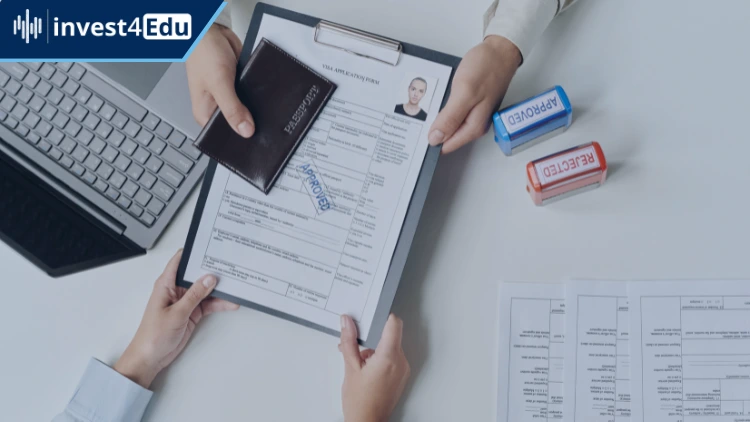
- Form DS-160 Confirmation Page: Complete the online visa application form and print the confirmation page with the barcode.
- Form I-20: This form, issued by your U.S. school, confirms your acceptance into a full-time academic program. Ensure it is signed and up-to-date.
- Visa Fee Payment Receipt: Pay the visa fee and bring the receipt as proof of payment. This is a requirement for your interview.
- Financial Documents: Bring documents that demonstrate your ability to fund your studies, such as bank statements, affidavits of support, and proof of scholarships or financial aid.
- Academic Documents: Carry your transcripts, standardised test scores (e.g., TOEFL, GRE, SAT), and letters of recommendation, if applicable.
- Photographs: Bring recent passport-sized photos that meet the U.S. embassy's specifications.
- English Proficiency Proof: If required, provide your TOEFL or IELTS scorecard or any other documentation that proves your English proficiency.
Dress Code for Your F1 Visa Interview
While there's no strict dress code for your U.S. F1 visa interview, it’s important to dress in a way that conveys professionalism and respect for the process. Here are some guidelines:
Interview Dress Code Guide
|
Category |
Men |
Women |
|
Top |
Collared shirt (e.g., button-down shirt) in a solid or subtle pattern |
Blouse or shirt that is simple and professional |
|
Bottom |
Dress pants or chinos in neutral colours (black, navy, or grey) |
Dress pants or a conservative skirt (avoid short skirts or overly tight clothing) |
|
Shoes |
Formal shoes or clean, polished dress shoes |
Closed-toe flats or low heels (avoid overly high heels or sandals) |
|
Accessories |
Keep it simple (e.g., watch, belt) |
Simple jewellery, minimal makeup, and avoid excessive perfume |
|
Avoid |
Jeans, t-shirts, flip-flops, or overly casual attire |
Overly casual outfits (e.g., leggings, shorts, or revealing clothing) |
Dressing professionally helps make a positive first impression and shows that you take the visa process seriously.
How to Apply for an F1 Visa for the USA
To apply for an F1 visa, follow these steps:
- Apply to a U.S. Institution: Secure admission to an accredited U.S. school that is certified by the Student and Exchange Visitor Program (SEVP).
- Pay the SEVIS Fee: Pay the SEVIS I-901 fee to activate your SEVIS record.
- Complete the DS-160 Form: Fill out the online non-immigrant visa application form.
- Pay the Visa Fee: The student visa fee for the USA varies; check the latest fee structure and make the payment.
- Schedule Your Interview: Book an appointment for your visa interview at the U.S. embassy or consulate in your home country.
- Prepare Your Documents: Gather all necessary documents, including passport, I-20 form, financial proof, and academic records.
- Attend the Interview: Go to the interview with confidence and provide honest answers.
U.S. F1 Visa Interview Guidelines
The U.S. F-1 visa interview is a crucial step in obtaining a student visa to study in the U.S. It allows the consular officer to assess your academic intentions, financial stability, and ties to your home country.
|
What to Do |
What Not to Do |
|
Be Punctual: Arrive 15-20 minutes early for your interview to allow time for security and check-in. |
Don’t Lie: Never provide false information. Be honest, as the consular officer can detect inconsistencies. |
|
Dress Professionally: Choose formal or business-casual attire to make a good impression. |
Don’t Be Overly Nervous or Anxious: Try to stay calm. Excessive nervousness can lead to mistakes. |
|
Be Honest and Clear: Answer all questions truthfully and clearly. Don’t exaggerate or give misleading information. |
Don’t Bring Extra People: Only the applicant should attend the interview. No family or friends unless allowed. |
|
Maintain Eye Contact: Show confidence by making appropriate eye contact with the officer while answering questions. |
Don’t Interrupt the Officer: Let the officer finish asking the question before responding. |
|
Bring All Required Documents: Have your passport, DS-160 confirmation, I-20, financial proof, and other documents neatly organized. |
Don’t Argue: Stay polite and respectful even if denied or asked difficult questions. |
|
Stay Calm and Composed: Take a deep breath, stay relaxed, and speak clearly even if you feel nervous. |
Don’t Rush Through Answers: Take time to think and give clear, honest answers. |
|
Listen Carefully: Pay attention to the questions and respond thoughtfully without interrupting the officer. |
Don’t Carry Prohibited Items: Avoid phones, electronics, or any prohibited items at the embassy/consulate. |
|
Be Concise: Provide brief but complete answers. Don’t over-explain unless the officer asks for more details. |
Don’t Over Explain: Stick to the point and avoid unnecessary details unless asked. |
F1 Visa Interview Questions: Key Areas to Prepare
During your F1 visa interview, you’ll likely encounter a range of questions to assess your intentions, qualifications, and financial stability. Here are some key areas and sample questions you can expect:
1. Interview Questions about Study Plans
These questions assess your academic goals and why you want to study in the U.S.
- Why did you choose the U.S. for your higher education?
- What is your major, and why did you choose this field of study?
- How does this program align with your career goals?
- What are your specific study plans once you arrive in the U.S.?
Tips: Be clear about your academic goals, explain your choice of program, and how it will benefit your career.
2. F1 Interview Questions for Background Check
These questions are meant to verify your personal history and background to ensure you meet visa requirements.
- Have you ever visited the U.S. before? If yes, under which visa?
- Do you have any relatives or close family members currently in the U.S.?
- Have you ever been involved in any legal issues or had a visa denied?
Tips: Answer truthfully. If you have a history of U.S. visits or issues, provide a clear explanation.
3. F1 Interview Questions to Understand University of Choice
The consular officer wants to ensure that you’ve carefully selected a legitimate and appropriate institution.
- Why did you choose this particular university?
- What made you select this program over others?
- How did you research your university and program?
Tips: Demonstrate that you have researched the university and program, and highlight the unique qualities that attracted you.
4. F1 Interview Questions around Academic Capability
These questions are designed to verify your academic background and abilities to succeed in the U.S. educational system.
- What is your academic background?
- What is your GPA or academic performance in previous institutions?
- Have you taken any standardised tests like the TOEFL or GRE? What were your scores?
Tips: Be honest and provide documentation (like transcripts or test scores) that support your academic qualifications.
5. F1 Interview Questions for Ties to Home Country
The consular officer will assess whether you have strong ties to your home country to ensure you will return after your studies.
- What are your plans after graduation? Will you return to your home country?
- Do you have a job offer or family waiting for you back home?
- What ties do you have to your country (family, property, future career)?
Tips: Emphasize the strong connections you have to your home country, such as family, career prospects, or property ownership.
6. F1 Interview Questions about Financial Status
The officer will want to ensure that you can financially support yourself while studying in the U.S.
- How do you plan to finance your educations?
- Can you provide proof of sufficient funds to cover tuition and living expenses?
- Do you have any scholarships, family support, or financial aid?
Tips: Provide clear evidence of how you will cover your expenses, such as bank statements, affidavits of support, or scholarship awards.
7. F1 Interview Questions about Post-Graduation Plans
These questions help determine your intent to return home after your studies and not overstay your visa.
- What are your career goals after completing your studies?
- Do you plan to work in the U.S. after graduation?
- If so, what are your options?
- How will studying in the U.S. help you achieve your long-term career goals?
Tips: Explain how your education will contribute to your career back home, reinforcing your intention to return after completing your studies.
Commonly Asked F1 Visa Interview Questions with Answering Tips
Your F1 visa interview can be challenging, but with proper preparation, you can navigate it successfully. Below are some of the most common F1 visa interview questions and tips for answering them effectively.
1. Why did you choose to study in the United States?
This question assesses your reasons for studying in the U.S. and whether you have a genuine academic purpose.
Answering Tip: Emphasize the quality of education in the U.S., the availability of specialized programs, and how the U.S. aligns with your career goals. Mention specific aspects of the U.S. educational system that attracted you.
Example Answer:
"I chose to study in the U.S. because of its high-quality education system and the opportunity to specialise in my field of interest, which is computer science. The university I applied to offers advanced research opportunities that will help me achieve my long-term career goals."
2. Why did you choose this particular university?
The consular officer wants to know why you chose your specific institution.
Answering Tip: Show that you’ve thoroughly researched the university and explain what makes it the best fit for your academic and career goals.
Example Answer:
"I chose XYZ University because it has an excellent computer science department with experienced faculty members and a strong alumni network. The university's curriculum offers courses that align perfectly with my career aspirations."
3. How do you plan to finance your education?
This is a key question, as the officer needs to ensure that you can afford tuition, living expenses, and other costs while studying.
Answering Tip: Provide clear and specific evidence of your financial ability, such as bank statements, affidavits of support, or scholarships.
Example Answer:
"My family has saved for my education, and I have a scholarship that covers part of my tuition. I also have personal savings and my parents’ support, which will cover my living expenses."
4. What is your plan after graduation?
The officer will want to know if you intend to return to your home country after completing your studies.
Answering Tip: Stress your intention to return to your home country and explain how your education will benefit your career there.
Example Answer:
"After graduation, I plan to return to my home country and work in the technology sector. The skills and knowledge I will gain from studying in the U.S. will help me contribute to the growth of the IT industry back home."
5. How will studying in the U.S. help you achieve your career goals?
The officer wants to ensure that your academic and career plans are realistic and aligned with your educational choice.
Answering Tip: Link your chosen program to your long-term career goals and explain how it will enhance your professional prospects.
Example Answer:
"Studying in the U.S. will provide me with access to cutting-edge technology and industry connections, which will be crucial for my career in data science. The U.S. offers the best resources and expertise that will allow me to excel in my field."
6. Why should we approve your visa?
This question is designed to assess your eligibility for an F1 visa.
Answering Tip: Explain why you meet all visa requirements, such as your intention to study, your academic and financial preparedness, and your plans to return to your home country.
Example Answer:
"I meet all the requirements for an F1 visa. I have been accepted to a reputable U.S. university, I have sufficient funds to cover my studies, and I am committed to returning to my home country after completing my education."
F1 Visa and Study Abroad Services by invest4Edu
invest4Edu offers valuable support for students applying for F1 visas, ensuring a smooth and successful visa process. Here’s how they can assist you:
- Study Abroad Guidance: Assistance in selecting top universities and programs, along with scholarship support.
- Visa Counselling and Processing: Step-by-step help with F1 visa applications, including document preparation and interview guidance.
- Document Review: Meticulous checks of DS-160, I-20, financial proof, and other required paperwork.
- Financial Planning: Guidance on preparing financial documents and budgeting for tuition, living expenses, and funding options.
- Career Counselling: Tailored advice to align academic choices with career goals and market demands.
- Psychometric Testing: Assessments to help students identify strengths and choose suitable career paths.
- Mock Interviews: Practice sessions with feedback to build confidence for the F1 visa interview.
- Post-Visa Support: Guidance on OPT, CPT, cultural adaptation, housing, and visa compliance.
With invest4Edu, students are fully equipped to navigate the complexities of studying abroad and achieve their academic dreams.
Conclusion
Being well prepared for your F1 visa interview is key to your success. By practising commonly asked questions, gathering your documents, and maintaining a confident and honest demeanour, you’ll increase your chances of receiving a favourable outcome. Follow these tips, and good luck!